
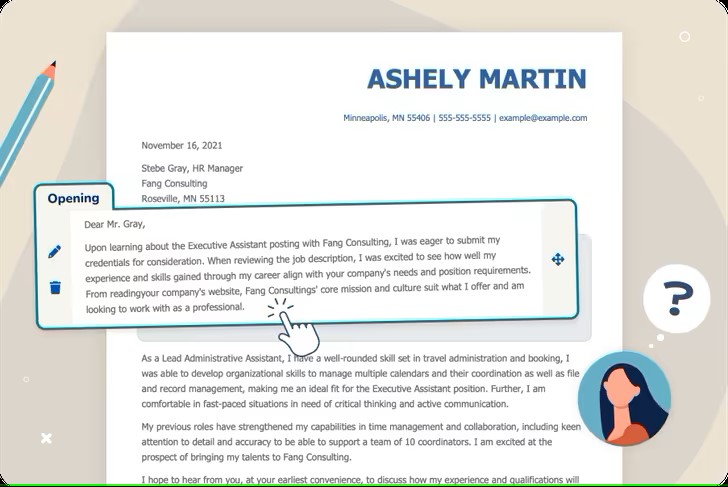
In the age of AI applications and one-click applies, are cover letters still worth writing—especially for remote roles?
Short answer: Yes. But only if you do them right.
💼 Why Remote Employers Still Value Cover Letters
Remote hiring managers don’t just want to see your experience—they want to feel your fit for a virtual team. A well-written cover letter can:
- Demonstrate clear written communication—a core skill in remote settings
- Clarify time zone alignment and working hours
- Add humanity and personality to your application
- Show that you’ve done your research and care about the role
It’s your chance to connect beyond bullet points.
✍️ What Makes a Remote-Focused Cover Letter Stand Out
If you’re applying for remote roles, go beyond the basics. Highlight:
- Experience with remote tools (e.g., Slack, Notion, Asana, Zoom)
- Your ability to self-manage, prioritize, and stay accountable
- Examples of written or asynchronous communication
- Specific success stories from remote roles or freelance projects
💡 Pro tip: Open with a sentence that ties your values to the company’s mission—“I’m passionate about helping people reclaim their time—just like [Company] does through its product.”
❌ Common Mistakes to Avoid
Don’t let your cover letter fall flat. Avoid:
- Repeating your resume—add depth, not duplication
- Using generic templates—especially those that start with “To whom it may concern”
- Ignoring remote-readiness—omit it, and you’ll seem unprepared
- Overexplaining availability—keep it simple and confident
📌 When You Should Always Include One
- If the job posting requests it
- If the role involves communication, client interaction, writing, or leadership
- If it’s a competitive or senior-level role
- If you’re making a career change and need to explain your transition
Even when it’s optional, a great cover letter can set you apart.
✅ Final Takeaway
In the remote job market, your ability to communicate through writing is everything.
A well-crafted, role-specific cover letter can turn a maybe into a yes—and show that you’re ready for the challenges (and freedom) of remote work.